
Bookmark and Share

Thursday
Sep082011

Green Building and Outdoor Lighting

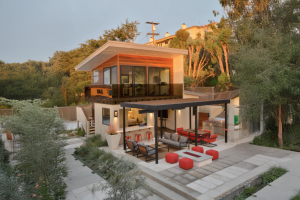
Outdoor lighting can be an integral part of any building design project. The visual impact can be great, not to mention the safety proper lighting can provide. As required by the building code, all outdoor lighting is required to be high efficacy. What does that mean? High efficacy lighting produces 40 lumens per watt, or less. Lumenes are a measurment of the amount of visible light emitted by a source. So, a high efficacy light fixture would be one that produces a high amount of visible light related to the amount of energy it consumes. Most LED and flurescent light fixtures will meet this requirement. As an alternative, the building code allows for outdoor lighting to be controlled by a manual switch or a motion sensor without an overide. The fixture must also be controlled by a photocell, time clock, or an energy management system, all of which must be provided without an overide. The goal of this regulation is to reduce the power consumption of outdoor fixtures and help assume these fixtures are not on, consuming energy, when not necessary. For now, landscape lighting is exempt from this requirement. Your local jurisdiction may have more stringent regulations. Ask your architect, energy consultant or lighting professional to be sure your project meets the code requirements wherever you are.

Thursday
Jul072011

How do I know my air conditioner is sized properly?

The square footage, eyeball, and "beer can cold" methods are not acceptable means by which to size a Heating, Ventilation, & Air Conditioning (HVAC) system. However, many contractors still use these archaic techniques. When replacing an existing unit, selecting the same size unit may not acceptable either, unless the unit size is proven with calculations. An oversized unit will cost more and use more energy than necessary. An undersized unit will be over stressed and will probably fail sooner, not to mention unable to provide the required heating and cooling.

Technical improvements in mechanical units, such as variable speed air handling and higher efficiencies, have made many past sizing strategies obsolete. Fortunately, there are now established national standards by which to size HVAC systems for a home. Many factors can impact these calculations including insulation, doors and windows, floor area, ceiling heights, orientation, etc.

Make sure your mechanical contractor prepares the proper load calculations and includes these as a part of their work. Alterntively, you can hire an independant consultant to perform the HVAC system design and load calculations. Once installed, verify the installtion with certified testing. If in doubt, consult with your architect to assure you are getting a properly sized air conditioner and heater.

Friday
Jun242011

Volatile Organic Compounds (VOCs) and Paint

Volatile organic compounds, otherwise known as VOCs are carbon-containing compounds that are released into the air as paint dries. Mixed with other elements, VOCs create ozone which can cause respiratory problems, headaches and nausea. VOC levels can be as much as 1,000 times higher for several years after new paint is applied. Paint is only 2nd after automobiles as the worst environmental offender. The problem is, VOCs are an essential component in paint’s performance. Paint is made up of pigment, binders and solvents. Solvents contribute to the majority of VOCs in paint, however, they are also key in keeping paint liquid until it dries. Some low VOC paints are hard to apply, take longer to dry, and have limited color options. Look for paint that carries the Green Seal. These paints are guaranteed to meet precise governmental standards. Green Seal paints are also required to be free of a host of other toxins in addition to low level of VOCs. As always, before making a decision, consult with your contractor or architect to assure you are making the best selection for your project.

Friday
Apr012011

Q: 12 of 20 Questions To Ask Your Architect

What are the steps in the design process?

The from conception to realization, the design process involves multiple phases. Depending on your project, different phases could be necessary to achieve the best results. Small projects may require fewer phases while larger projects may require more phases. Each of which is integral in the success of a project. A typical architectural design process may include the following.

  1. Pre-Design
  2. Schematic Design
  3. Design Development
  4. Construction Documents
  5. Government Review
  6. Bidding Assistance
  7. Contract Administration

For a project that also includes interior design, there are sub-phases of this process that may coincide with the architectural design process.

Each phase can have it's own set of goals, challenges, and achievements. In the following weeks, Hauck Architecture will outline the different project phases in more detail. We will discuss what type of projects can benefict from the different phases with examples of real projects . If you just can't wait, the Process section of our site gives an outline of what to expect.

Monday
Jan312011

Q: 11 of 20 Questions To Ask Your Architect

What would the architect expect the fee to be for this project?

No two projects are the same. Therefore, no two projects have the same fee structure. If the scope of a project is clearly defined from the beginning, we are able to estimate the time and resources necessary to perform each project phase. Our proposal for Architectural services is usually a lump sum, divided proportionally between these phases. If the scope is not clearly defined, we can perform the services on an hourly basis until such a point when the scope has been defined. At that time, you will have the option to transition to a lump sum contract or continue on an hourly basis. We will walk you through the design process and explain what to expect at the conclusion of each phase. Estimates can be provided for expenses such as printing and delivery. In addition, estimates can be provided for permit fees, site surveys, soils reports, or anything else that may be applicable for your project.

Copyright © 2010, Hauck Architecture. All rights reserved. Site design by Gary Barnes.

'USGBC' and related logo is a trademark owned by the U.S. Green Building Council and is used by permission.